
Hear the full post, or read along below.
Nearly two years ago, in November 2023, I attended an Eastport Civic Association membership meeting at the Eastport Fire Hall to present our ongoing restoration of the formerly empty lot now known as the Burnside Sanctuary, on the corner of Chesapeake Ave and Burnside Street.
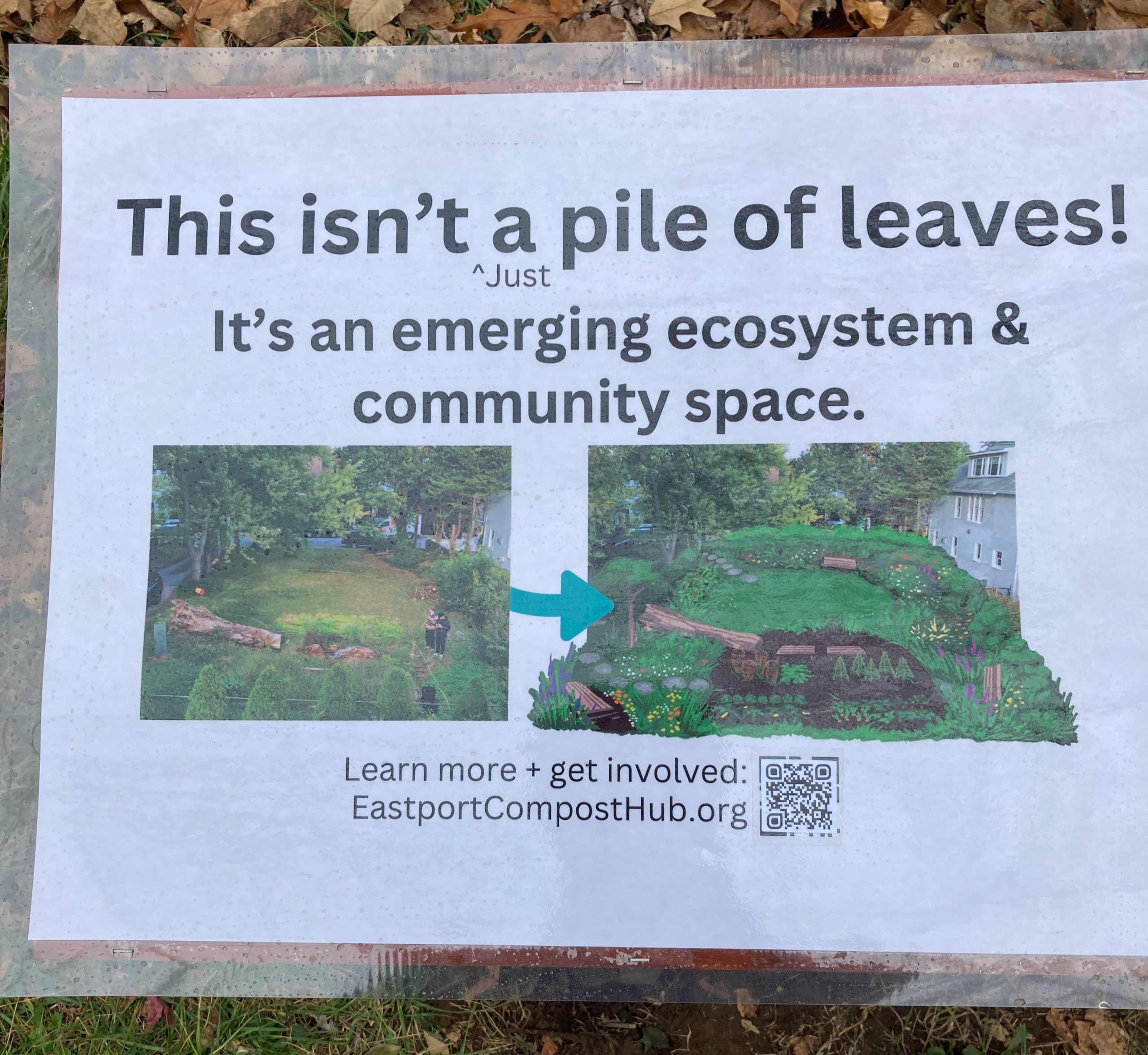
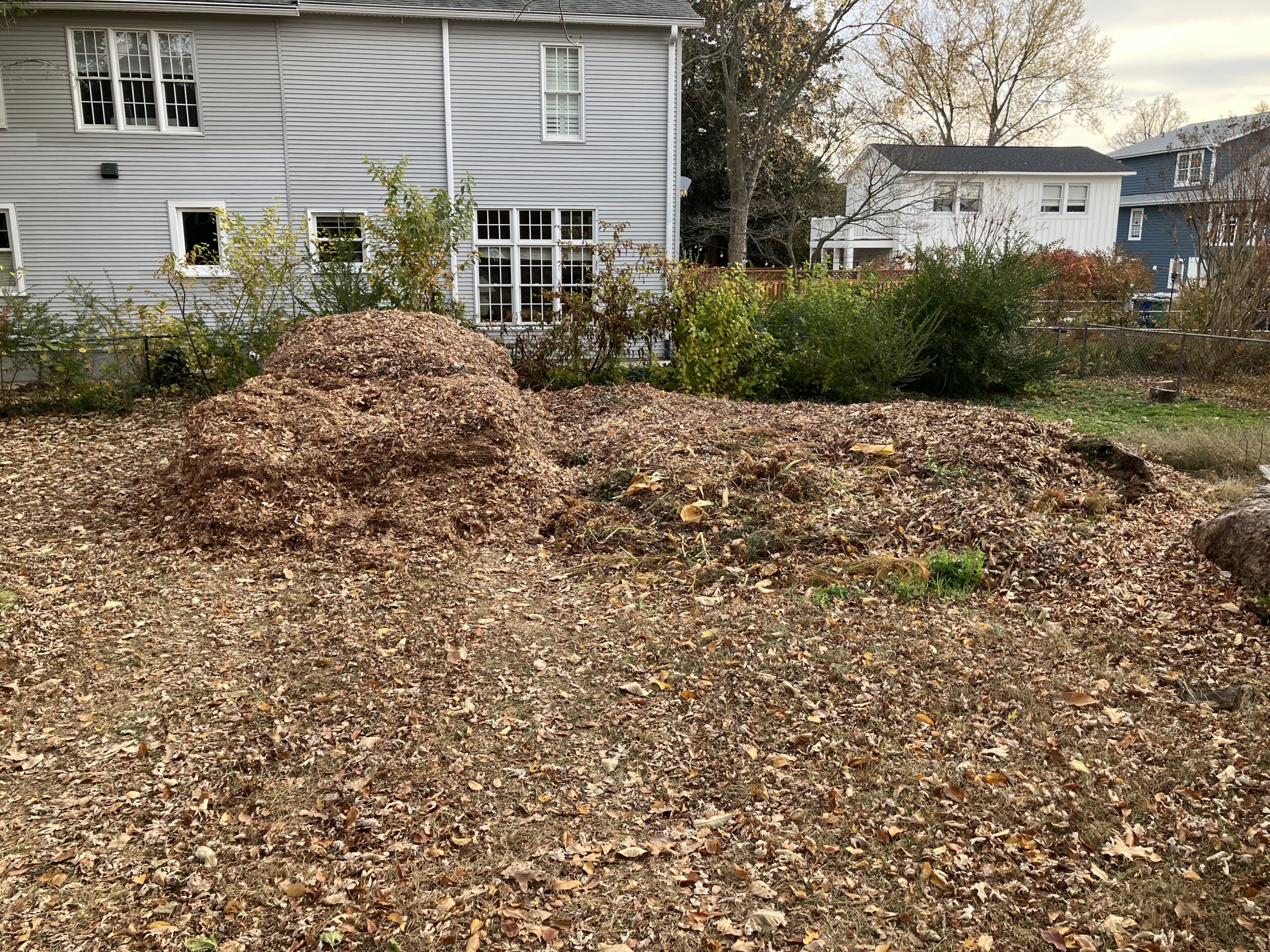
We had invited landscapers to drop off their leaves there instead of bringing them to the dump, to build organic soil matter and revitalize the ecosystem. This is obviously the opposite of what people generally do—most pay to have the leaves hauled away. I wanted to make sure I connected with the ECA (which seems like the HOA of Eastport) to communicate what I was doing and invite participation. We were also kicking off a community composting drop-off initiative in parallel, which I wanted to spread the word about. So I was there to present briefly to the meeting.
The majority of the meeting consisted of then-State Delegate Sarah Elfreth presenting to the ECA (a predominantly older, mostly white group) about how much money was available for neighborhood safety measures. The one component I remember notably was a proposed $50,000 to put monitored security cameras on the corners around President Street. Huge amount of money—understandable from their perspective. I myself had been in the neighborhood when violent stuff happened affecting the wider community. However a community-oriented wellness approach is a much better use of resources.
Then I got up and gave my presentation briefly about what we were doing, telling them it’s not just a pile of leaves, but an emerging community space and ecosystem.
At the end of the meeting, Ms. Donna Johnson—who I did not know at the time—stood up, dressed all in purple. She was upset about the Housing Authority no longer allowing her to have a free food distribution shelf in her foyer for her neighbors to pick up food from, especially meaningful going into the colder winter months. This was an ongoing area of conflict, and still is to some extent, with the Housing Authority – it was drawing media attention and whatnot.
After the meeting I met with Ms. Donna and brought her some big plastic bins to help her organize her clothing pantry, and we connected to some extent.
Then in the spring, as we were preparing for the United Way Changemaker Challenge—presenting a collaborative meal-prep framework where people would gather in commercial kitchen spaces to create take-home meals for themselves as a community-building, skill-building, food-access program—we had a couple of sessions making food at the Lighthouse Shelter for the people who lived there.
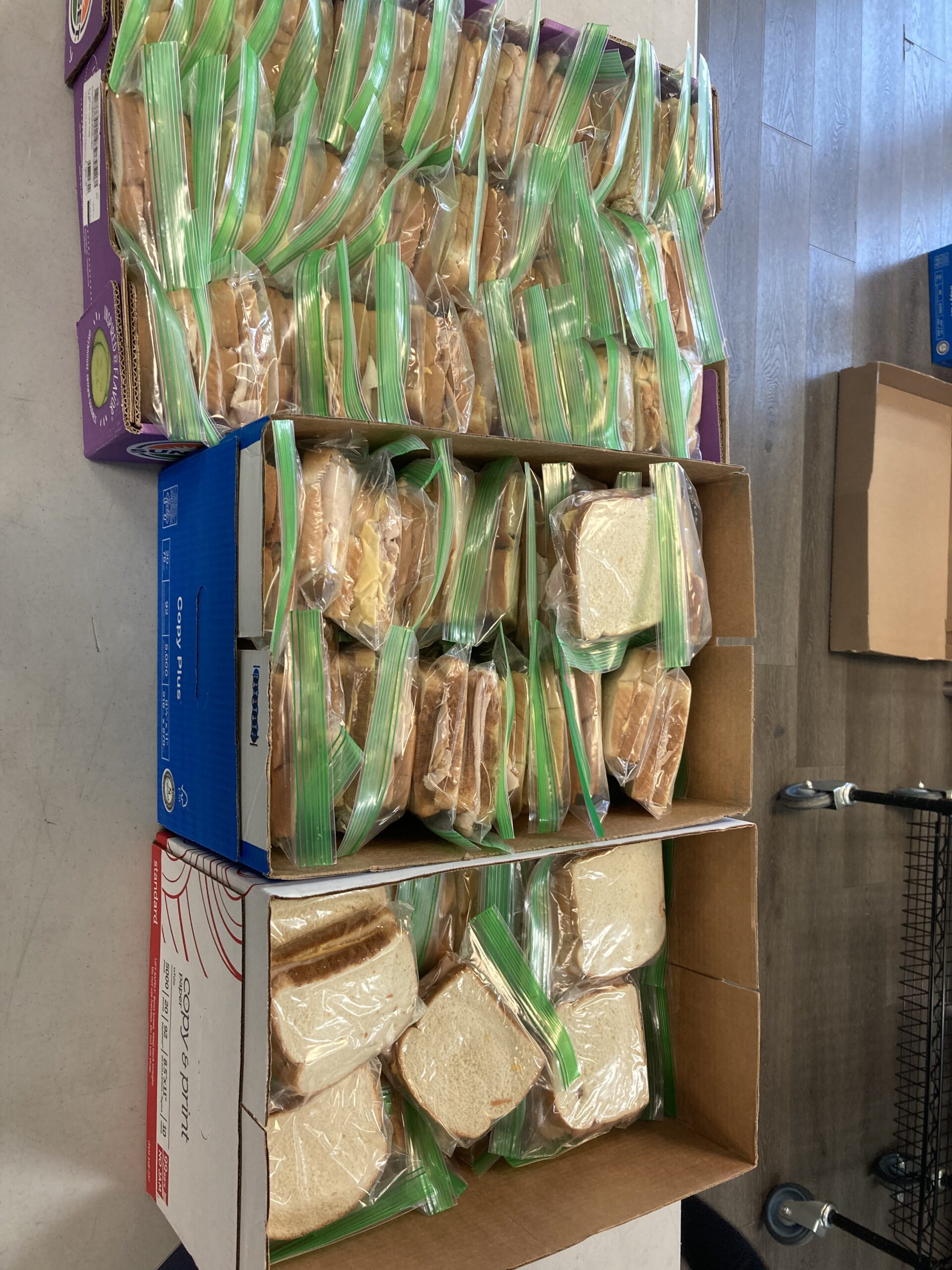
As I built a relationship with them, including Ms. Kelly who at that time managed the Lighthouse food pantry, she told me they had too many sandwiches—it was a problem. Churches were supposed to make 50 sandwiches for the shelter but would make 100 instead. I said, “I know someone who can make sure the extra food reaches people.”
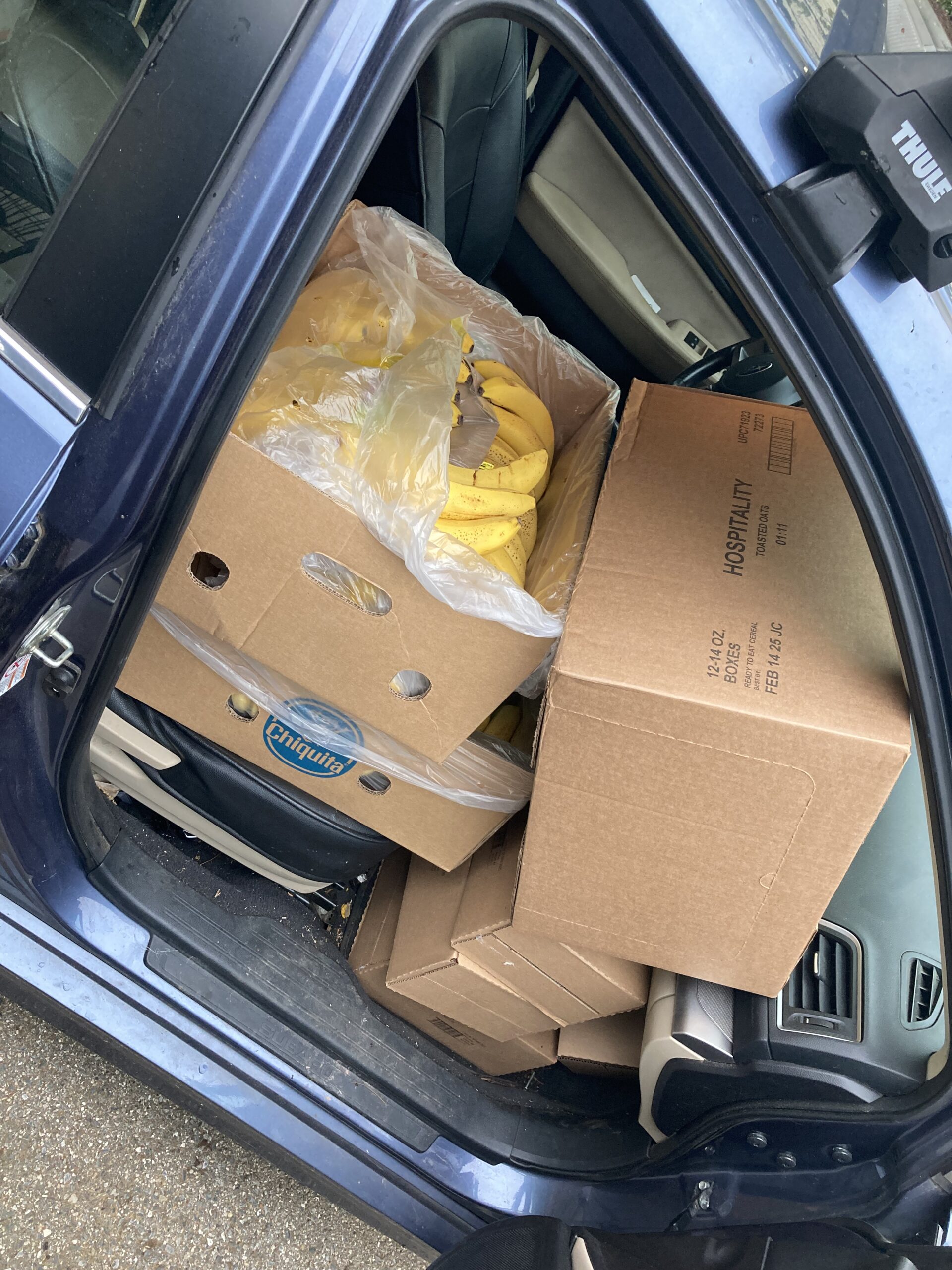
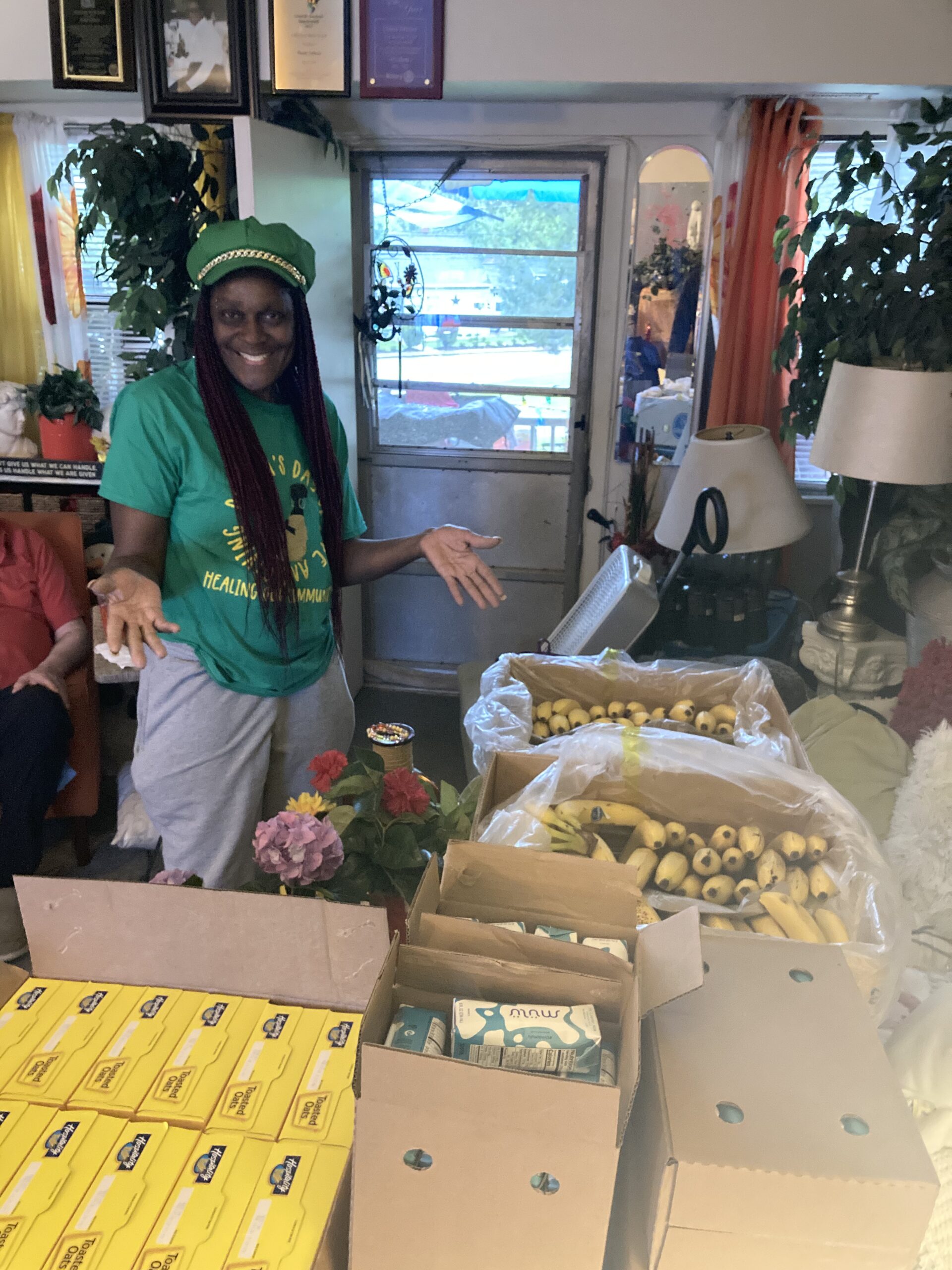
I ended up being a kind of go-between. As I commuted into Eastport to work on our neighborhood projects, I would stop by the Lighthouse Shelter, fill my brother’s car (which I was driving at the time) with boxes of bananas, sandwiches, and whatever overflow they had, and bring it to Ms. Donna.
It was on one of those visits that I first met and interacted with kids who possibly were not having enough to eat—something I hadn’t consciously recognized before. Meeting an eight-year-old getting off the bus and stuffing sandwiches into his backpack really struck me. It wasn’t something I’d encountered before, and it stuck with me.
It’s wild that one of the kids I met that day I ended up mentoring later that year—just by chance—and I continue to mentor him to this day. He’s a big part of our garden-building activities in the neighborhood (Harbor House).
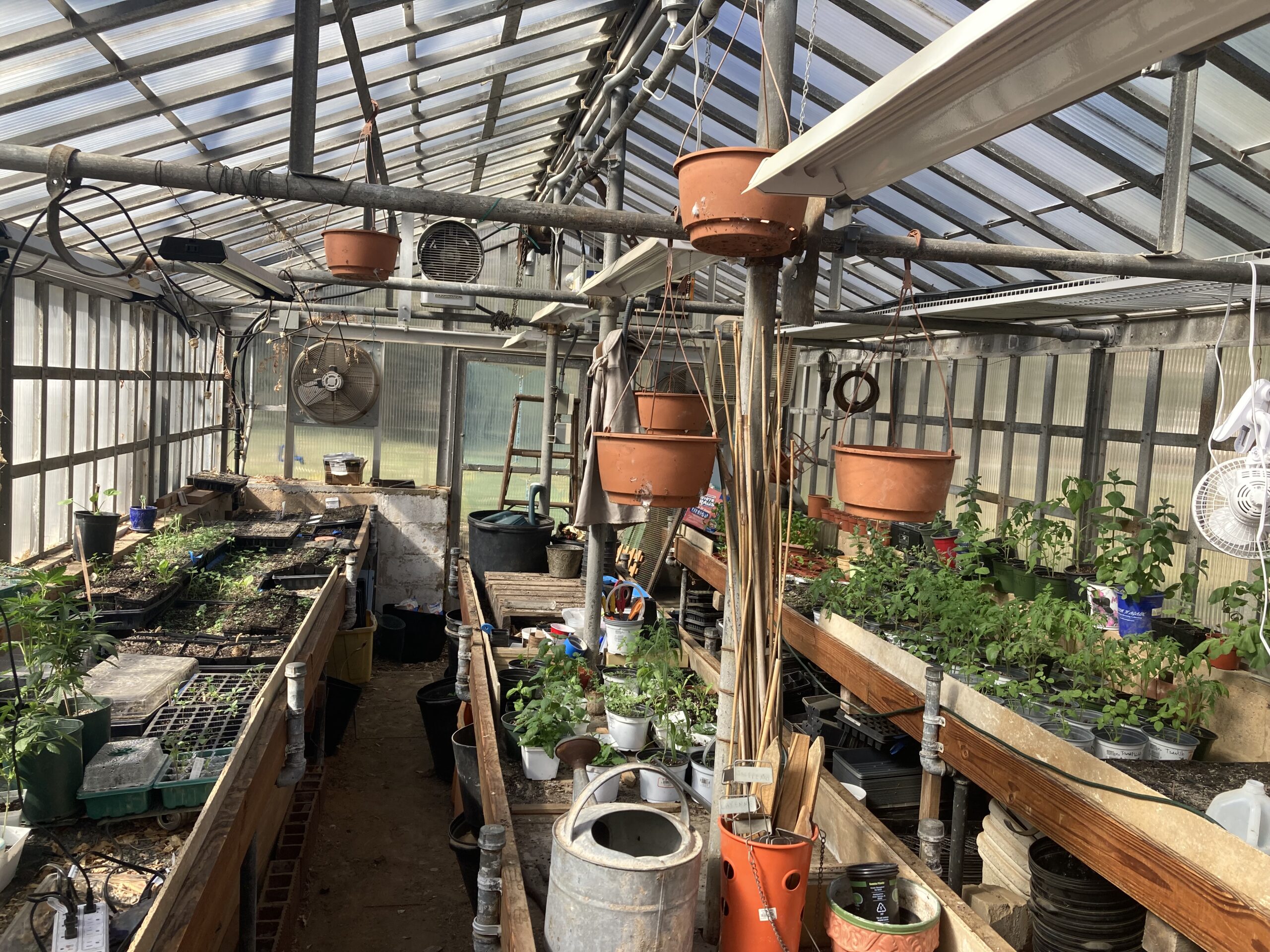
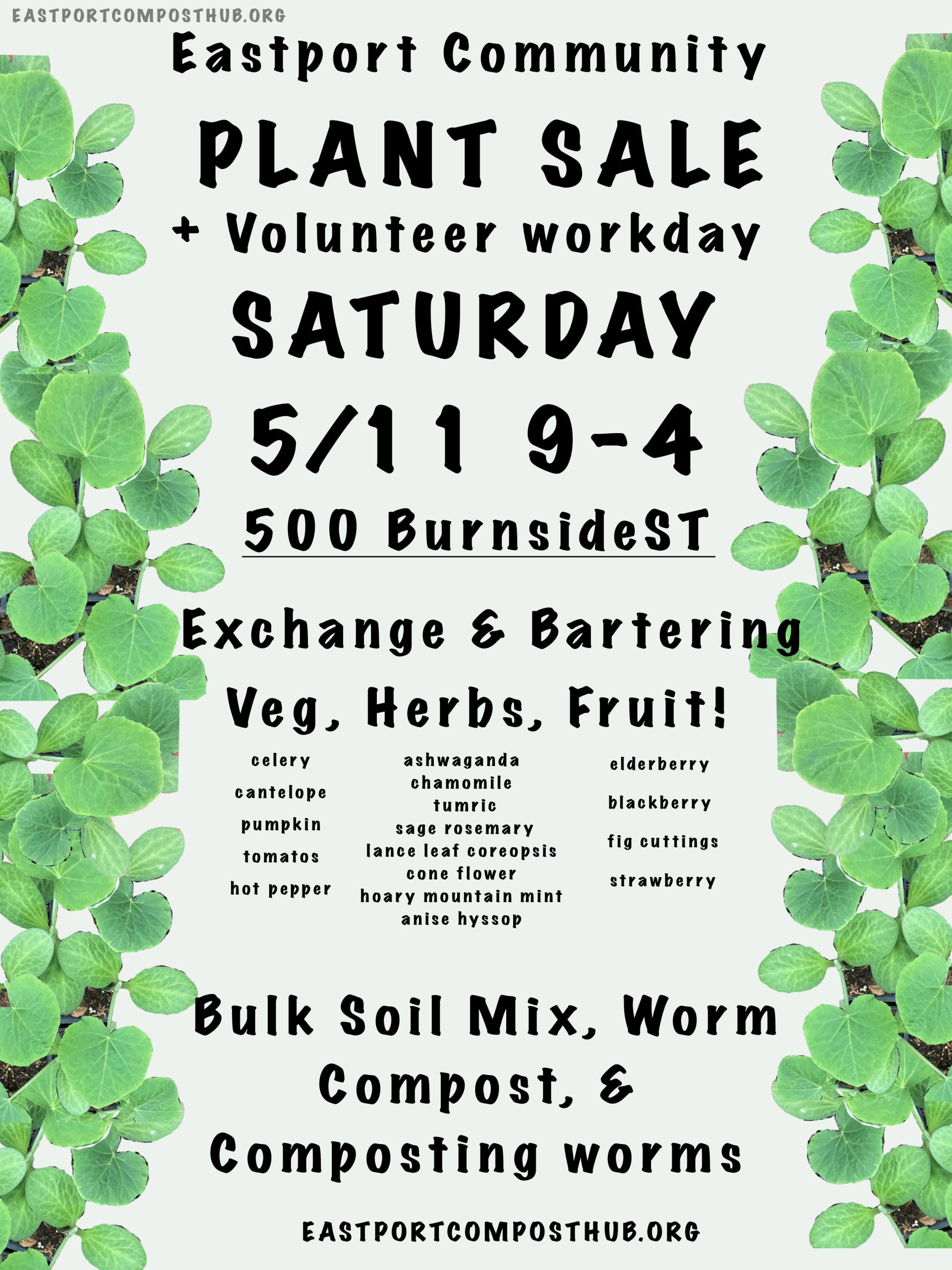
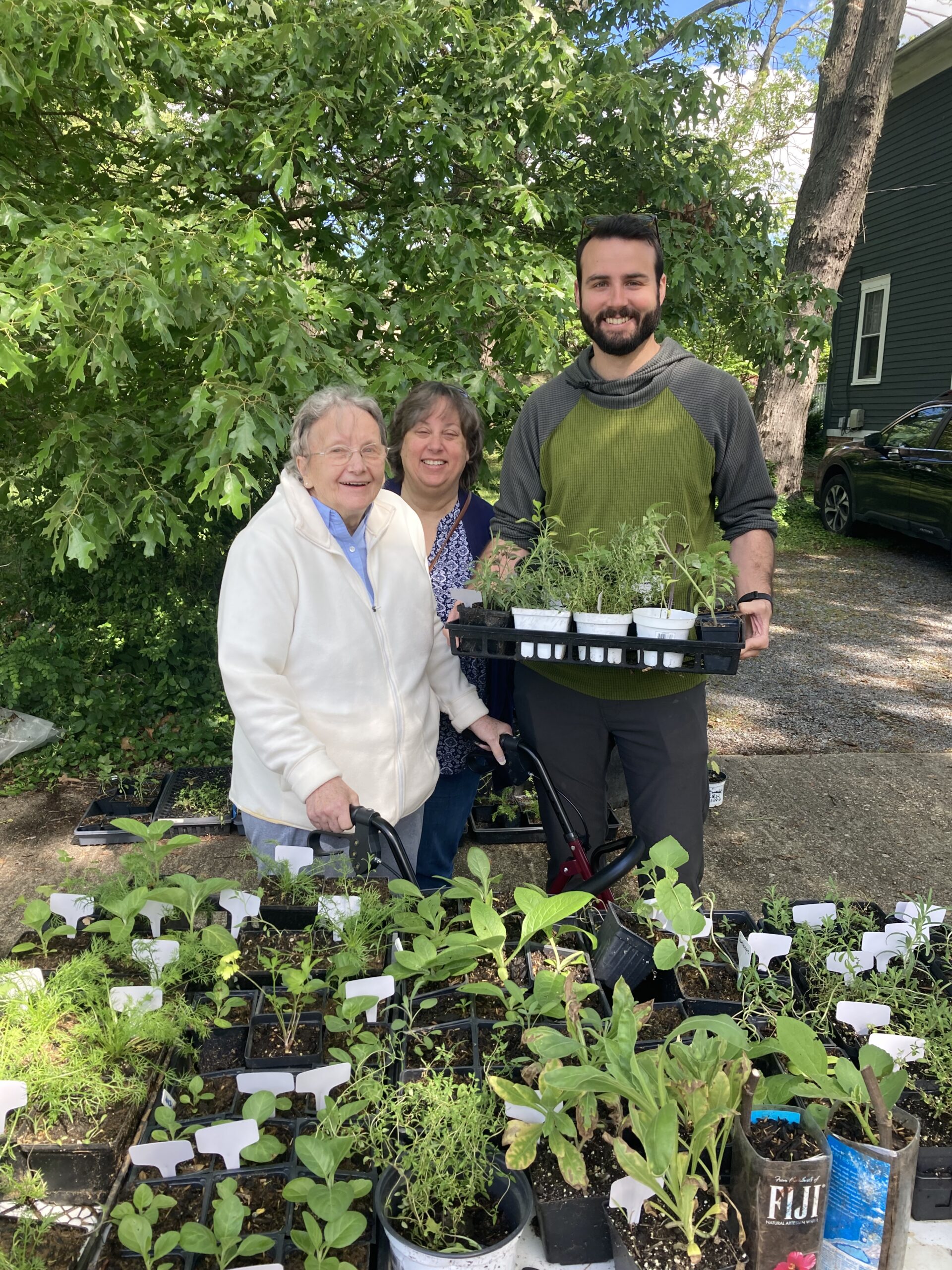
That spring of 2024 was the first year that I grew plants in collaboration with Kevin Littell, using his greenhouse. I wasn’t entirely sure what Joy Grows’ mission was at that point—I think we were still called Annapolis AG—but we grew a bunch of plants and held two plant sales in Eastport that spring and summer. We distributed the plants to people around the neighborhood. I also dropped off a few plants to Ms. Peaches when I was bringing her other things. We built some tables for her and did a few other small projects, and she planted a few of those plants in front of her door. They grew beautifully, and people enjoyed stopping by to pick tomatoes and little peppers.
So, in summer 2024 I kept up with gardening, visiting different farms, not really sure what Joy Grows’ mission was but continuing along the same lines. In the fall, I started mentoring with Seeds for Success, working with the same young man I had met earlier that year at Ms. Donna’s house.
I finished my undergrad in December 2024 with a B.S. in Sustainable Food Systems—focused on growing food collaboratively and composting, all very much in line with what we’re up to now, but still unsure what our main endeavor would be. I made proposals to different landowners about starting community-oriented agriculture projects, but nothing really stuck.
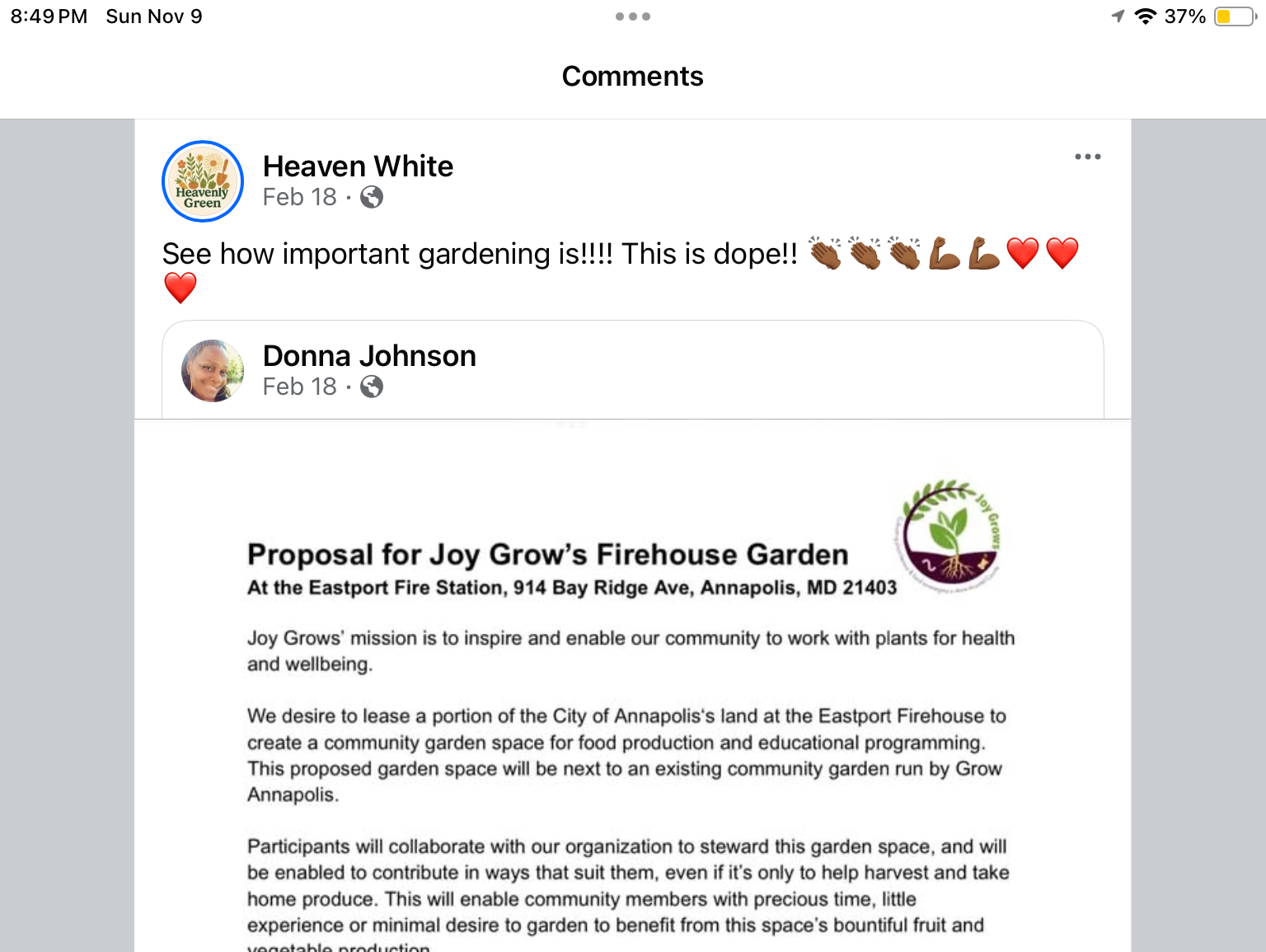
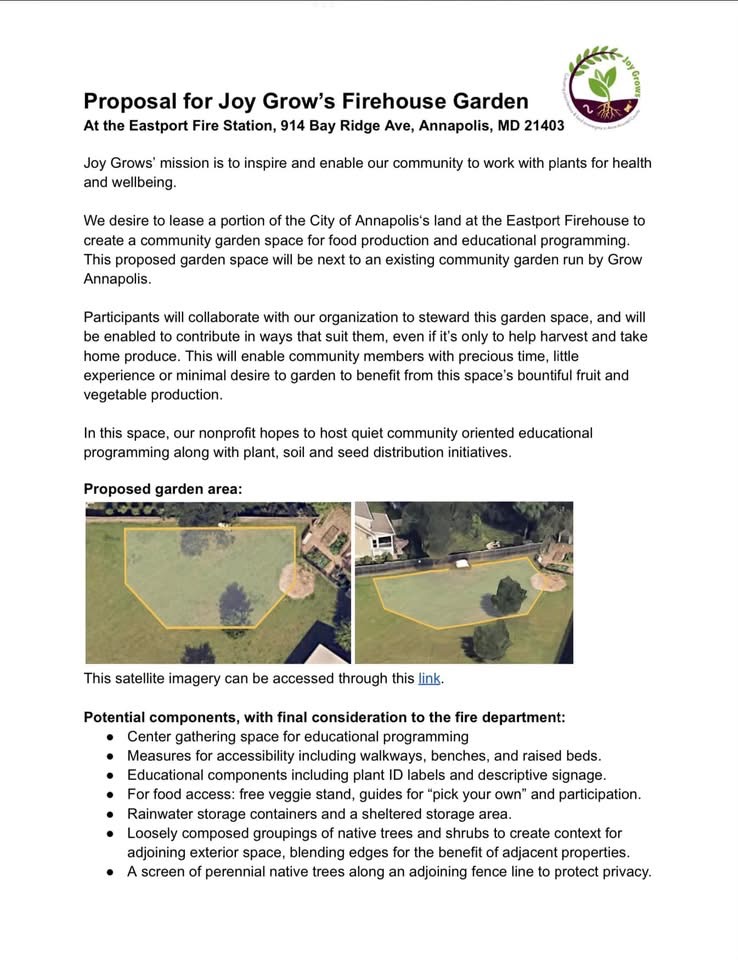
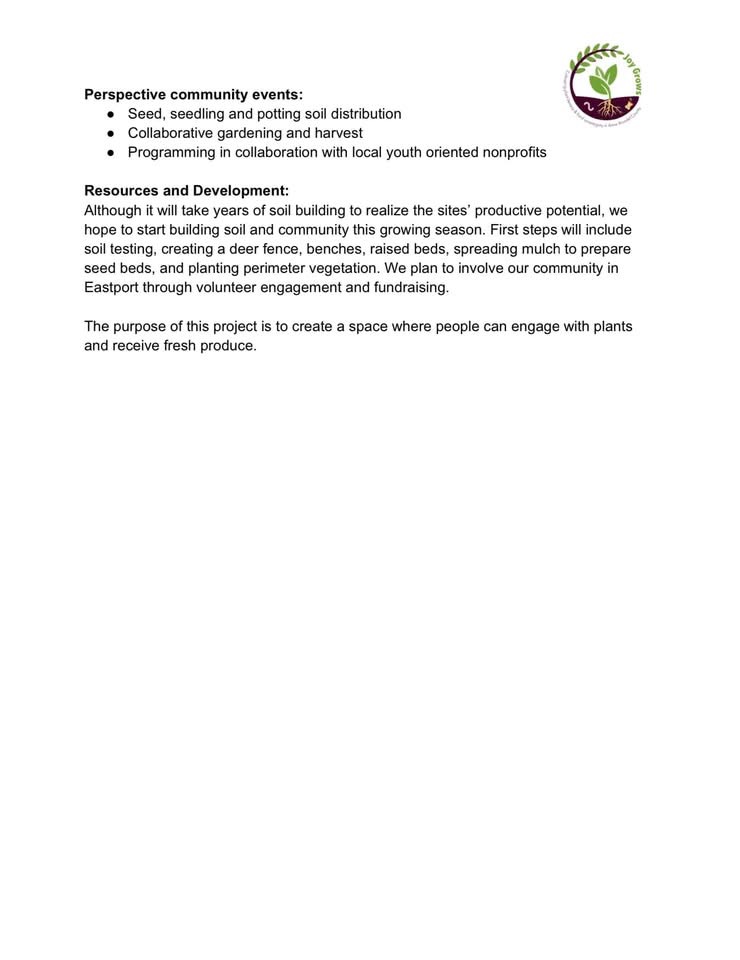
Finally, I made a proposal for the Eastport Fire Station—to create a community garden site on the couple acres they have behind the firehouse. I thought it would be a great thing for the firefighters to spend time on while waiting for calls—producing food for the community. That didn’t come through, but a woman named Ms. Heaven White reposted the proposal, and I believe Mrs. Pantha Stansberry (now our board chair) saw it on Facebook and asked Peaches to invite me to build a garden at Harbor House.
It made perfect sense. They have the open space, the people who are interested in gardening, and the people who want fresh vegetables but face barriers accessing them. It should be a right to have a serving or two of fresh veggies every day—this should be undeniable. If people want to eat vegetables, they should have access to them.
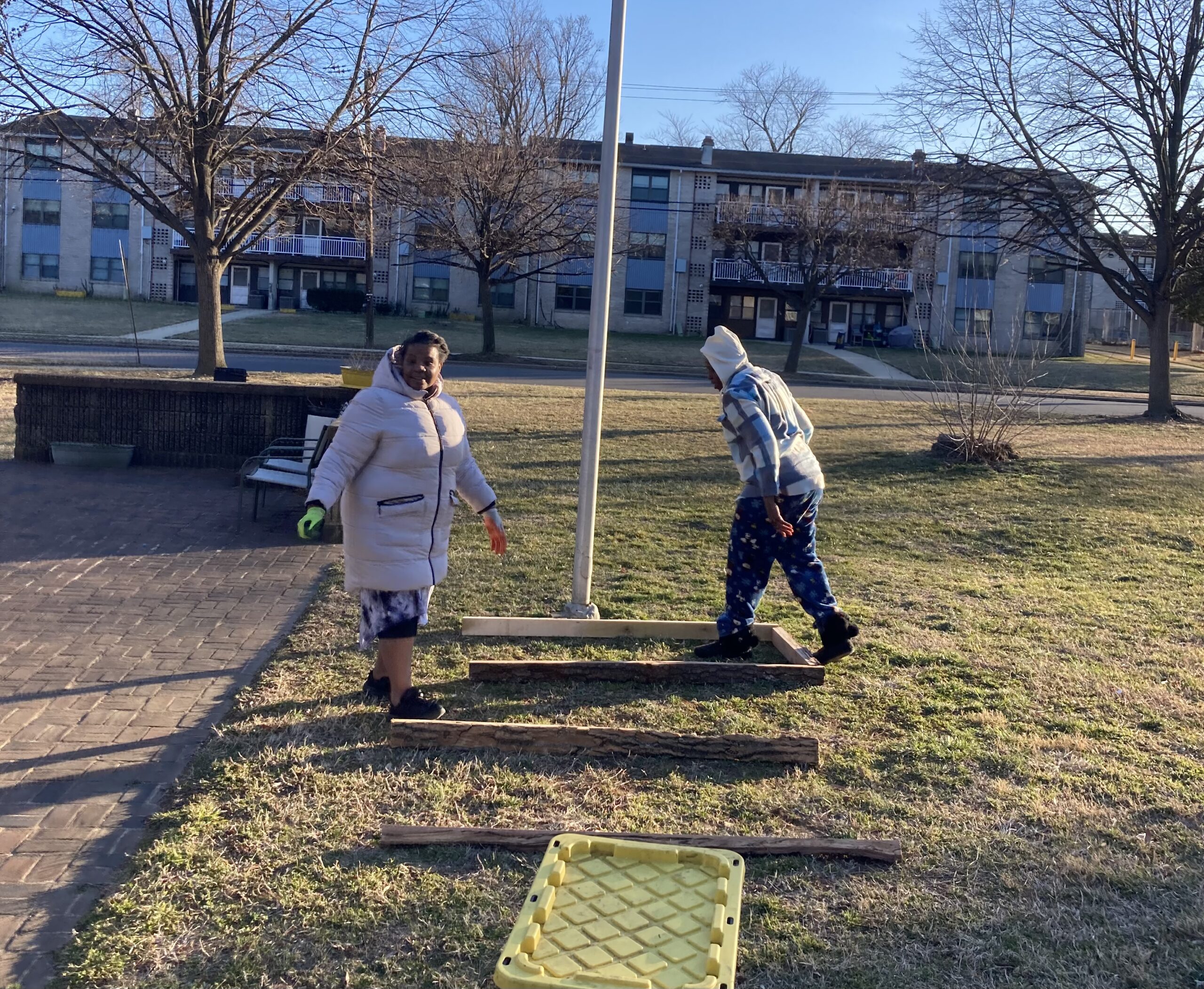
We broke ground—me, Peaches, Pantha, and her daughter—around March 1st, 2025. I had attended a Housing Authority meeting but didn’t yet have an MOU set up, so that had to be resolved before we could move forward. There were a lot of small learning moments at that very compact test site, which turned out to be perfect for learning and community connection.
So the Healing Garden was born.
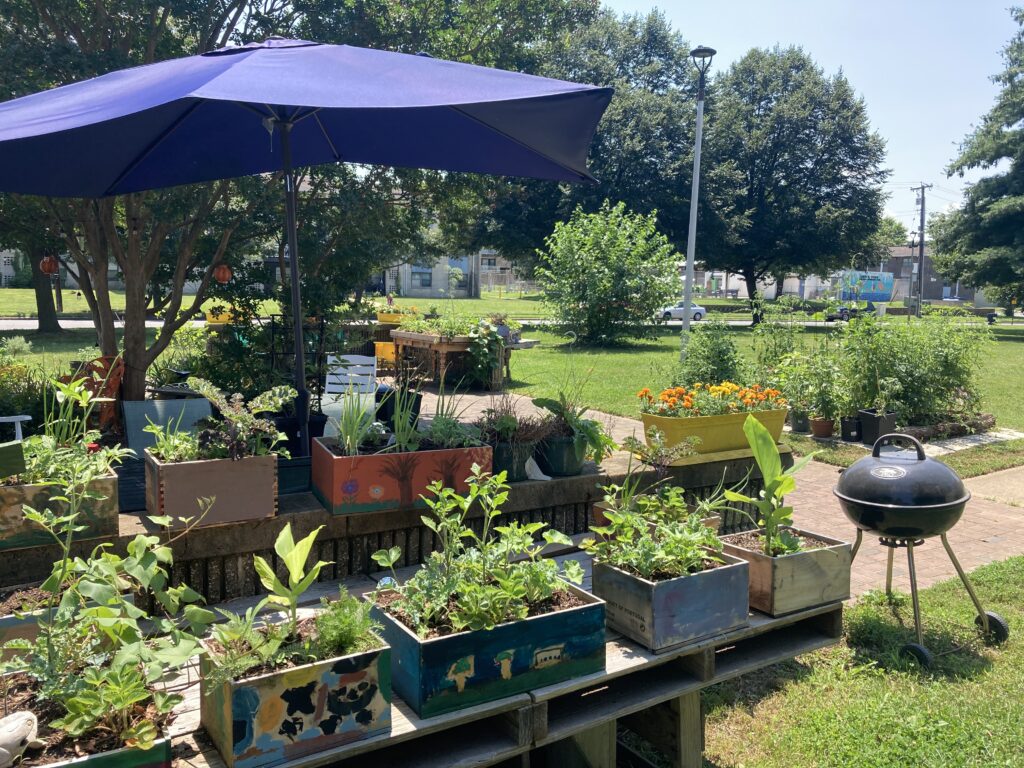
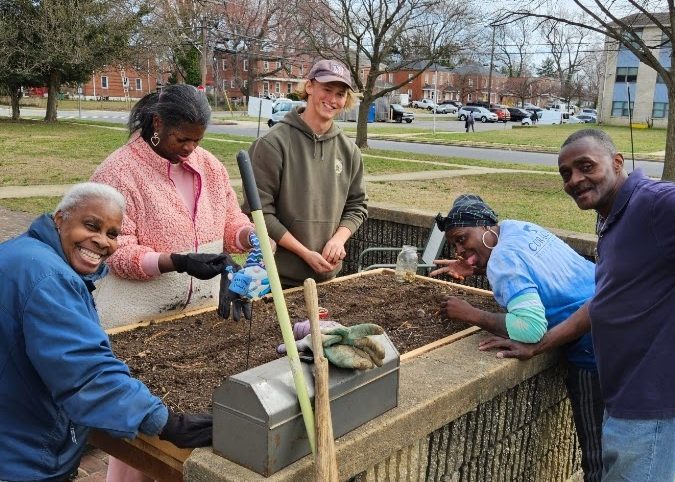
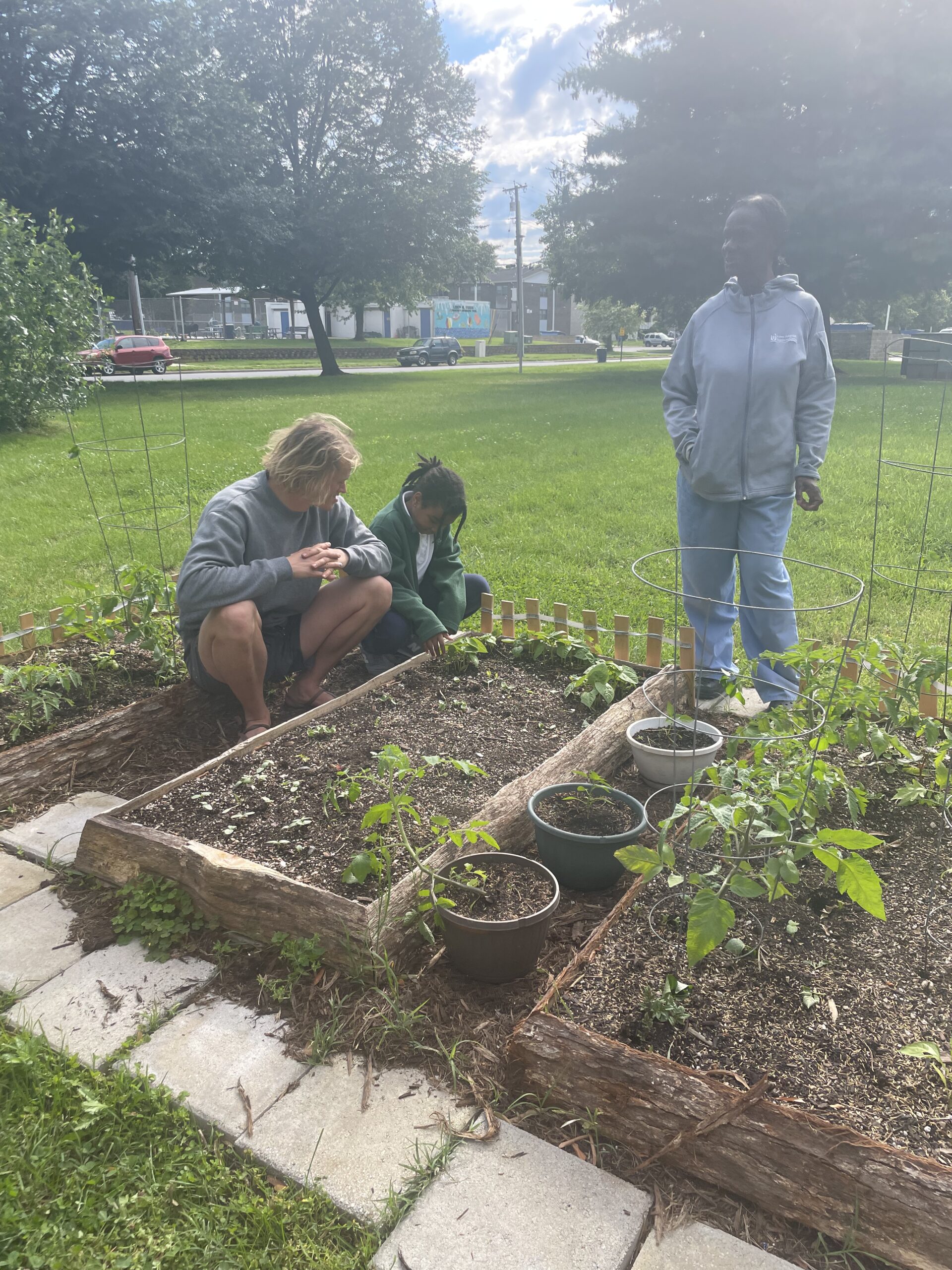
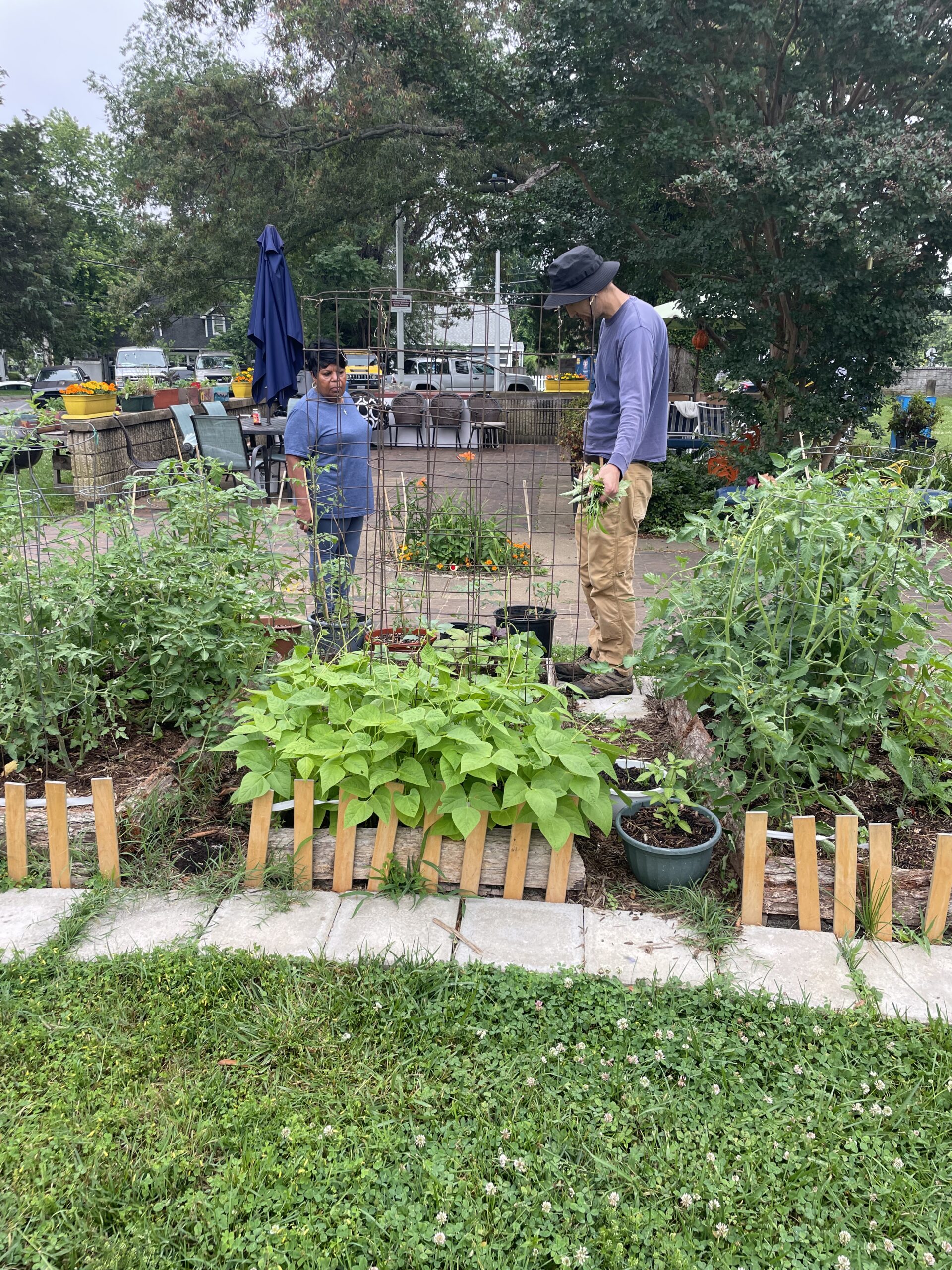
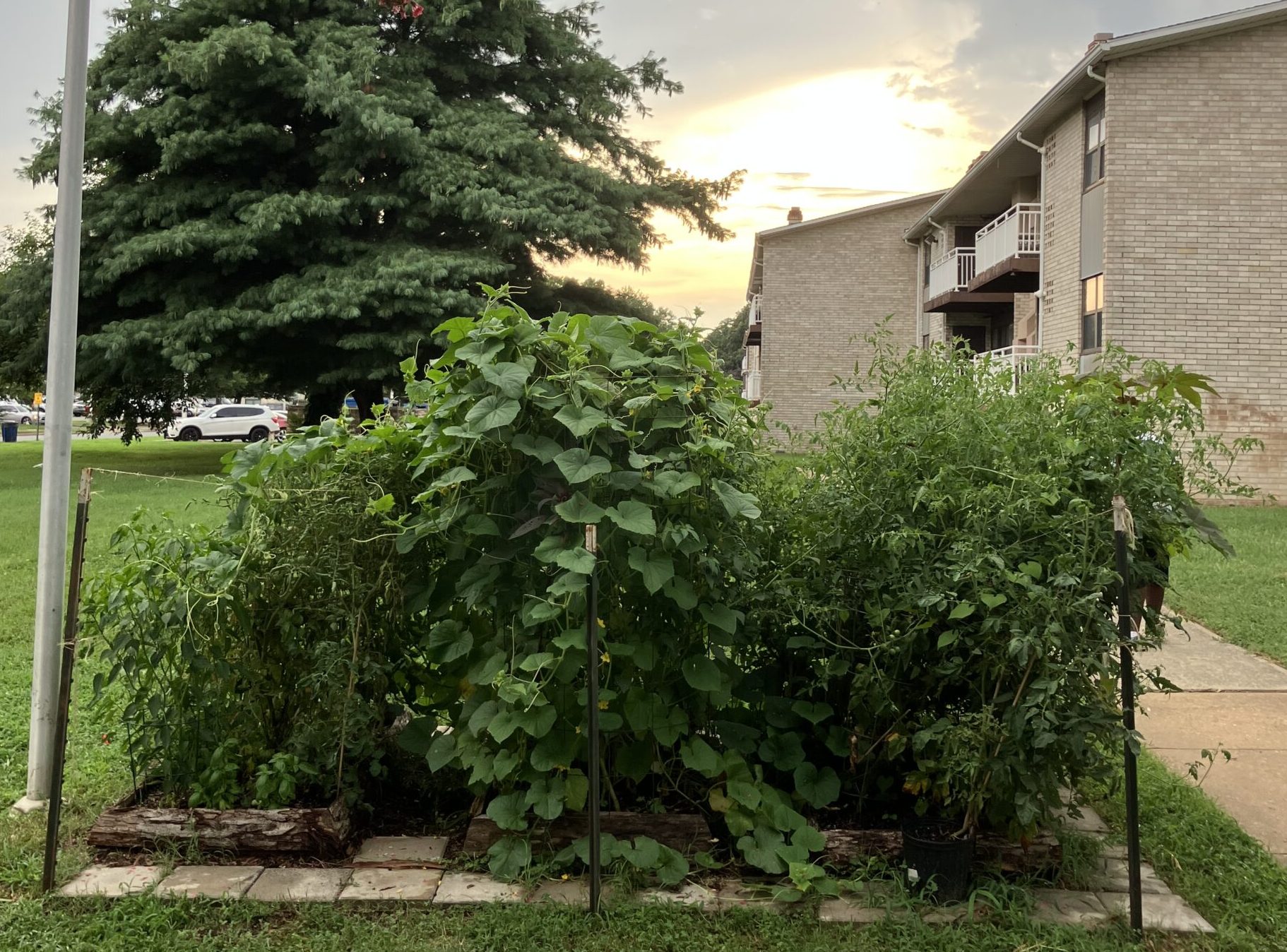
We held “Garden Club” for six months straight, every Sunday at 4:00—missing just one for Mother’s Day. Every month we went to the Housing Board meeting and showed all the great things we were doing, all the joy that came from even this little garden site. The in-ground beds are 6 ft by 10 ft each, with about 20 small container boxes sitting on the courtyard wall, plus a planter table—a tabletop built with 2x4s filled with soil so people who have a hard time bending down can still work with the plants.
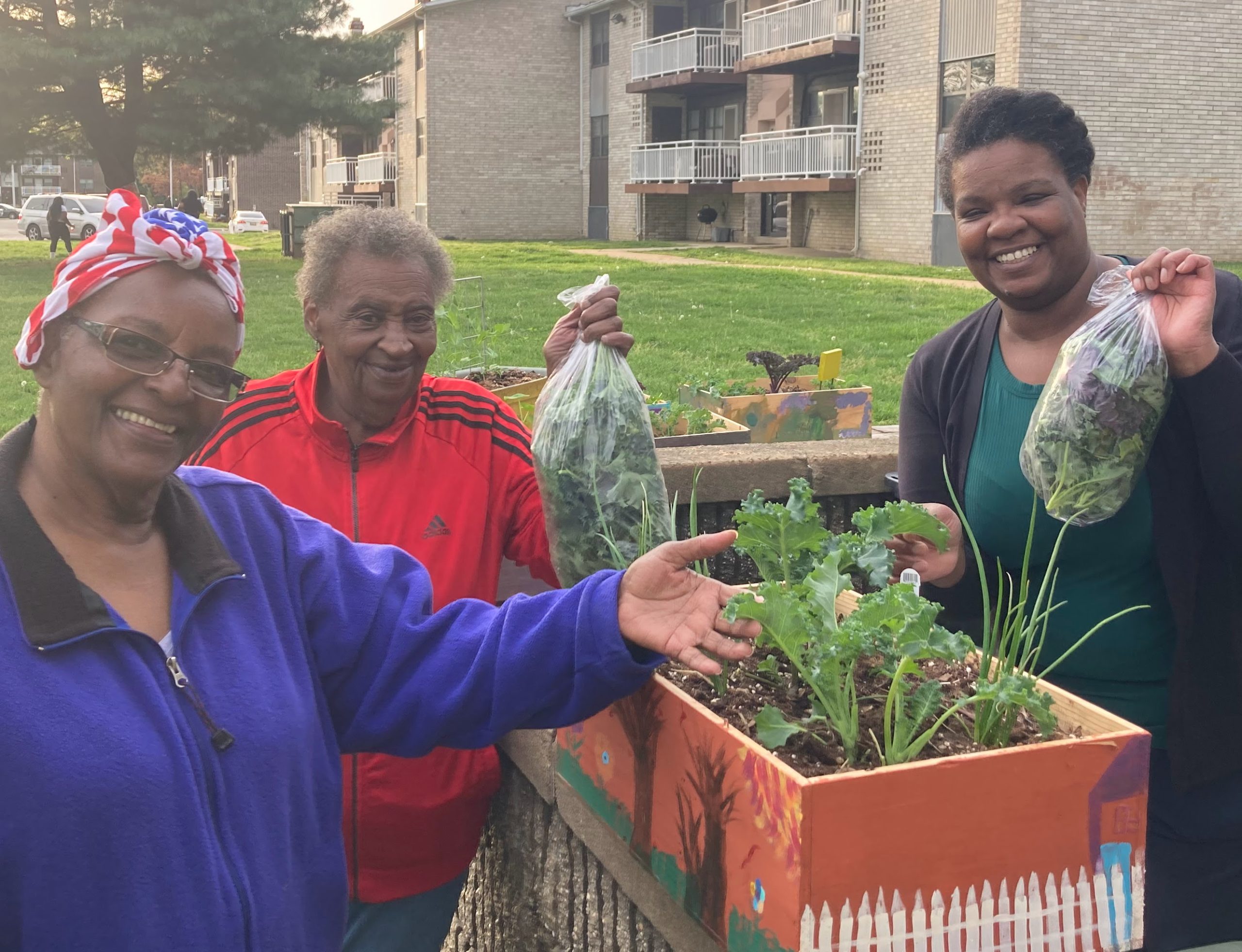
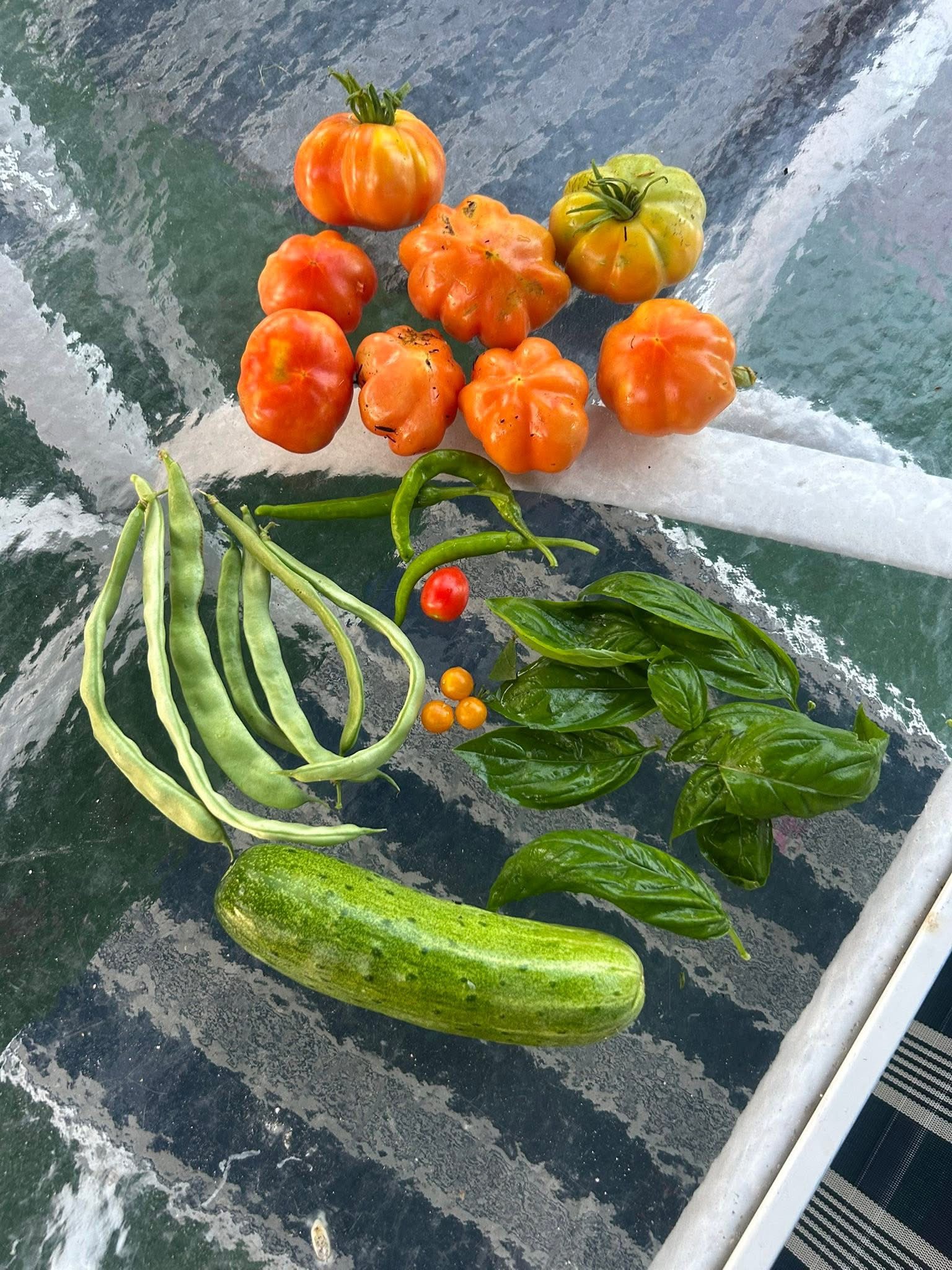
The garden was incredibly abundant, all thanks to community members—especially Peaches—for keeping it well watered through the dry summer months. I’d estimate there were thousands of servings of vegetables produced from that garden: cucumbers the kids ate like ice cream cones, peppers of all sorts, tons of beans and tomatoes (big and small), sweet peas in the spring, and bags of kale.
It really showed the impact of just having a little shared garden at Harbor House. It proved that Joy Grows was responsible enough to build and maintain a garden space—and it set the stage for the larger initiatives we’ve embarked on since.


One Response